

The time is now for
She Rises Collective.
Indigenous women have experienced economic oppression.
Evidence of this is seen as early as 1779 during the Sullivan’s Expedition/Campaign, when George Washington order troops to destroy Haudenosaunee corn fields, apple orchards and villages as an act of agricultural warfare.
We must capitalize on the upward trend seen recently of women owning businesses despite the following statistics:
- Smaller share of total businesses
- More growth, but less revenue
- In most cases, slower growth
- Revenue disparity
Native American / Alaskan Native Business Women Stats
Sources:
2019 State of Women-Owned Businesses Report by American Express
Minority Business Development Agency Fact Sheets
Of 28 million businesses in the U.S., women own 39%.
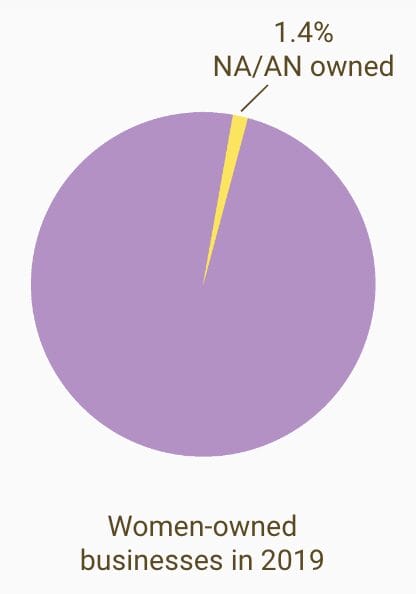
Alaskan Native businesses account for 1.4% of those. In other words, we own just 161,500 companies.
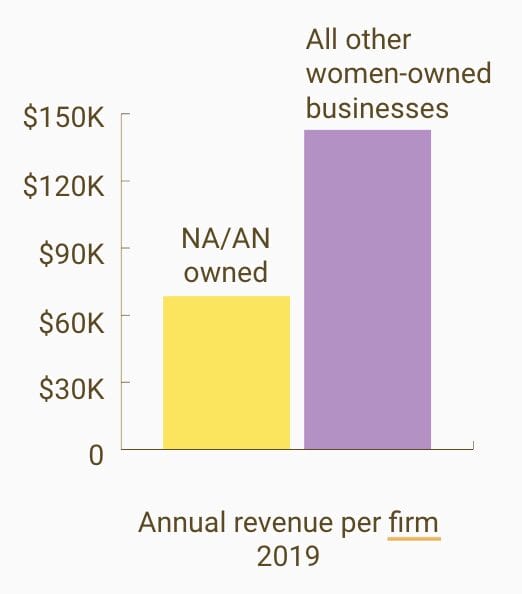
Our revenue is half that of other women-owned businesses.
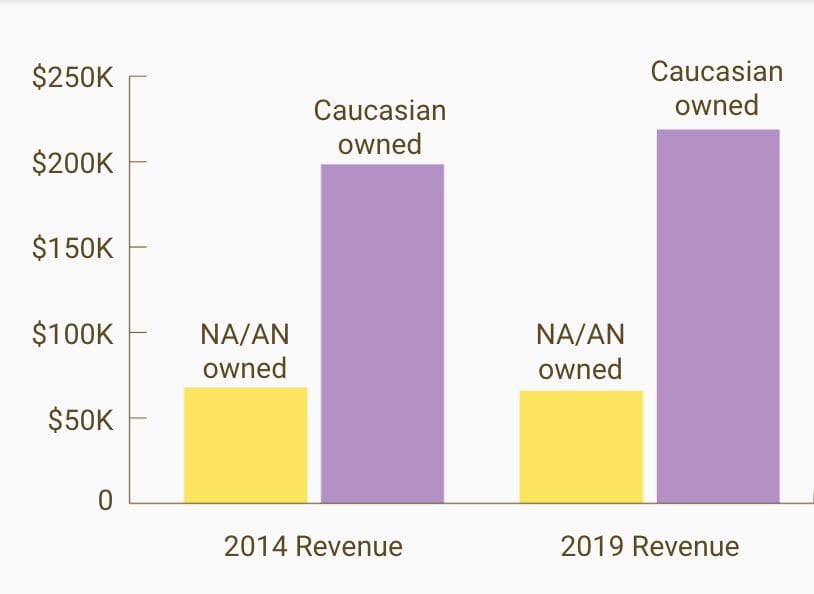
While caucasian-owned business revenue has grown, ours remains the same.
We have the lowest growth of all women-owned businesses of color.
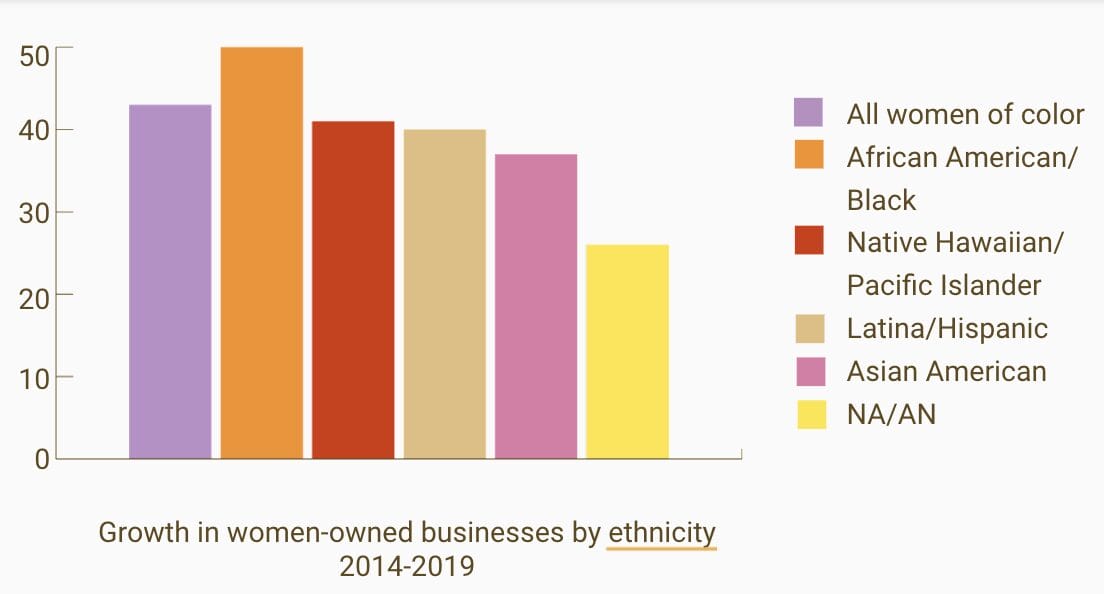
And the second-lowest number of all race/ethnicities.
Source: American Express 2019 State of Women-Owned Business Report
Trends in number of firms, employment, and revenues for women-owned businesses by racial/ethnic group.
NUMBER OF FIRMS:
| Race/ethnicity | 2019 Number of Firms | % Chg 2014-2019 | Annual % Chg 2014-2019 | % Chg 2018-2019 | Share of All Women-Owned Businesses |
| All women-owned firms | 12,943,353 | 21.3% | 3.9% | 5.4% | 100% |
| All minority-owned firms | 6.417,407 | 42.8% | 7.4% | 10.2% | 50% |
| African American/Black | 2,681,179 | 49.8% | 8.4% | 11.6% | 21% |
| Asian American | 1,369,348 | 37.4% | 6.6% | 9.0% | 9% |
| Latina/Hispanic | 2.346,190 | 39.6% | 6.9% | 9.5% | 18% |
| Native American/ Alaska Native | 180,316 | 25.5% | 4.7% | 6.4% | 1.4% |
| Non-minority owned firms | 6,525,946 | 5.6% | 1.1% | 1.1% | 50% |
The Disparity Between Non-Minority and Minority Woman Owned companies is increasing.
Closing this revenue gap would create 4 mil new jobs and $981 billion in revenue
SOURCE: 2019 State of Women-Owned Business Report by American Express

She Rises Collective Knows Indigenous Women Can be So Much More
To RISE, we must:
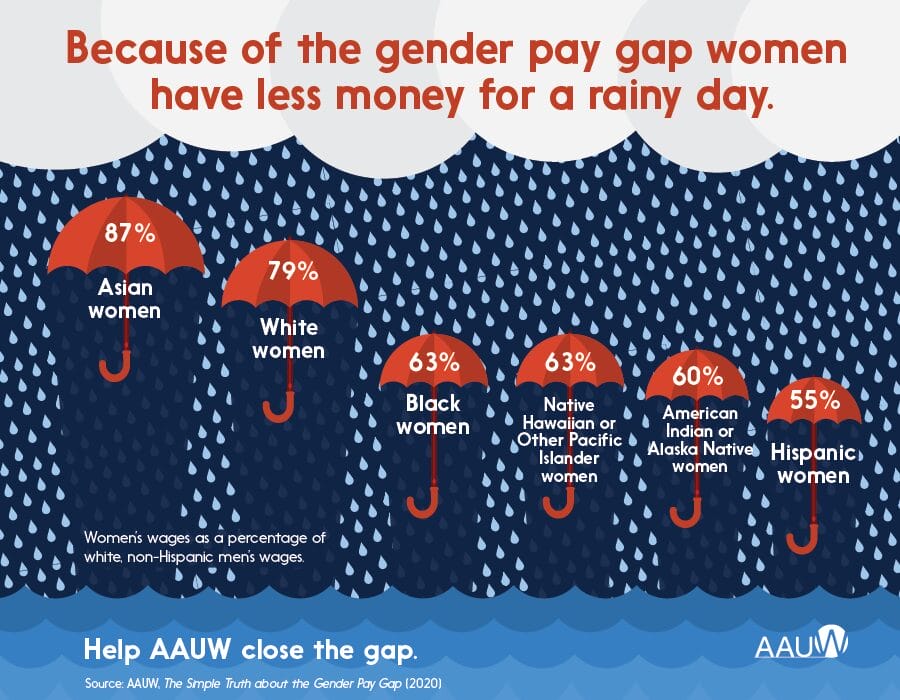
CLOSE THE PAY EQUITY GAP
American Indian & Alaska Native women earn 60-cents for every $1 earned by a Caucasian man.
To RISE, we must:
ACHIEVE WEALTH EQUITY
Earning less every year results in a lifetime wage loss for Indigenous Women of more than $1 mil less in some states.
To RISE we must:
UPLIFT MOTHERS
Indigenous women’s wage gap has damaging implications for their families. Research by The Institute for Women’s Policy Research (IWPR) found that two out of three Native American mothers are the primary breadwinners for their families.
She Rises Collective
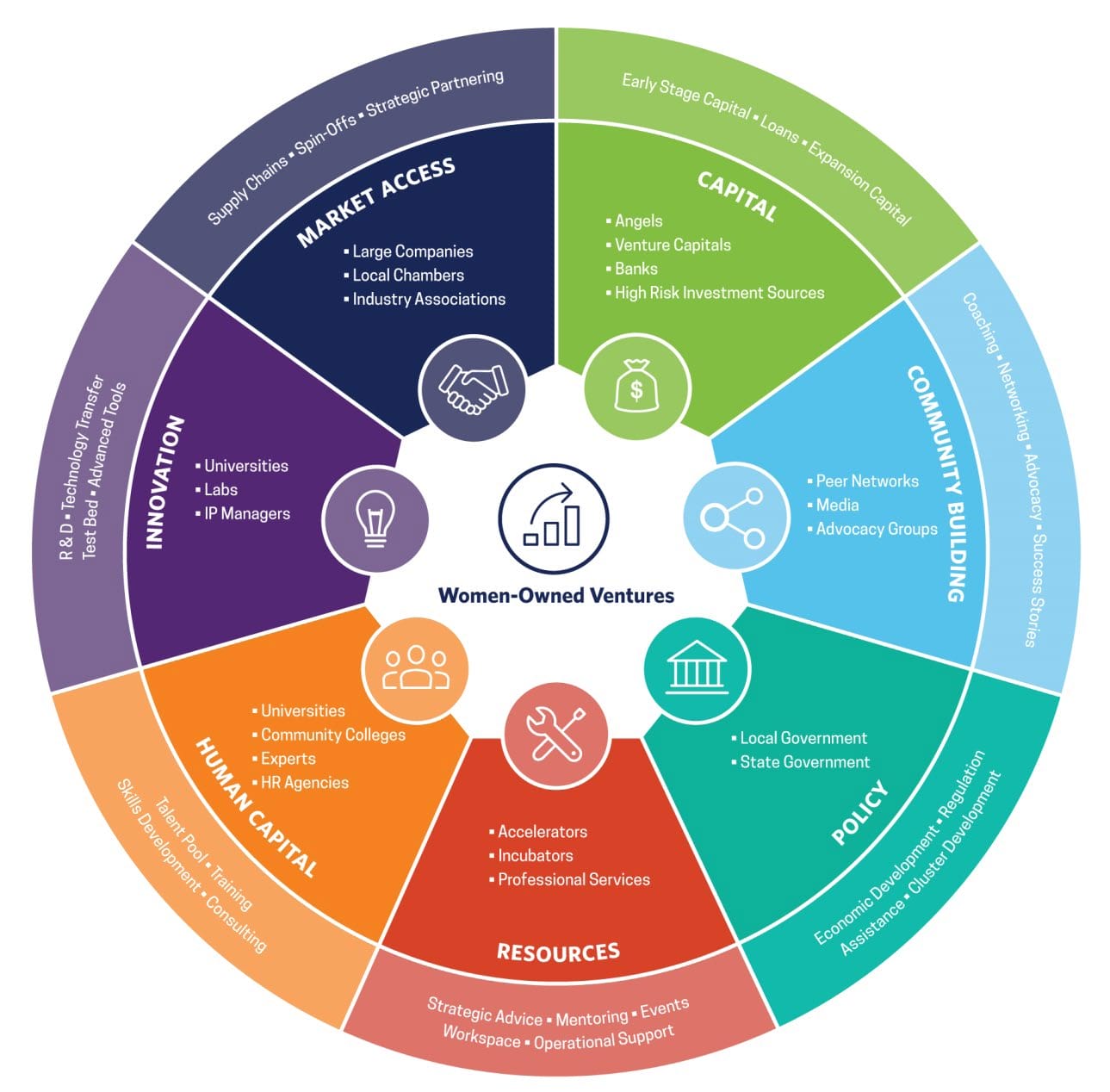
must provide Indigenous Women in Business with:
- community through networking and mentorship
- educational opportunities including financial literacy, business plans, and marketing
- connection to resources and organizations
- access to startup funding – loans and venture capital
- representation in the business world and change the narrative of Indigenous Women in Business
- inspiration through role models and mentors that change perceptions
- equity through pay that encourages successful women entrepreneurs
“To be sure, centuries of colonization and subjugation on this continent have greatly affected Indigenous communities, particularly women.
On top of high levels of unemployment and poverty, Indigenous women are at greater risk for gender-based violence and discrimination, and all of these factors also come into play when considering professional barriers against Indigenous women.
On top of this, when it comes to career aspirations, statistical evidence links minority representation in a profession to the success rate of minorities in that field. And, historically, Indigenous representation has been lacking.”
SARAH KAUSS
FOUNDER OF S’WELL